National Safe Work Month 2026 | Workplace Safety
In mining, transport, heavy industry and other safety-critical environments, recruitment and safety teams can sometimes find themselves pulling in different directions.
Recruitment wants people on-site. Safety wants the right checks completed first.
The pressure is understandable.
A project is starting.
A shift needs covering.
A skilled operator is urgently required.
A candidate has been shortlisted and is ready to go.
But a thorough pre-employment medical assessment takes time – and when every day of vacancy can affect productivity, it can be tempting to see the medical process as the thing standing between a candidate and the job.
It doesn’t have to be.
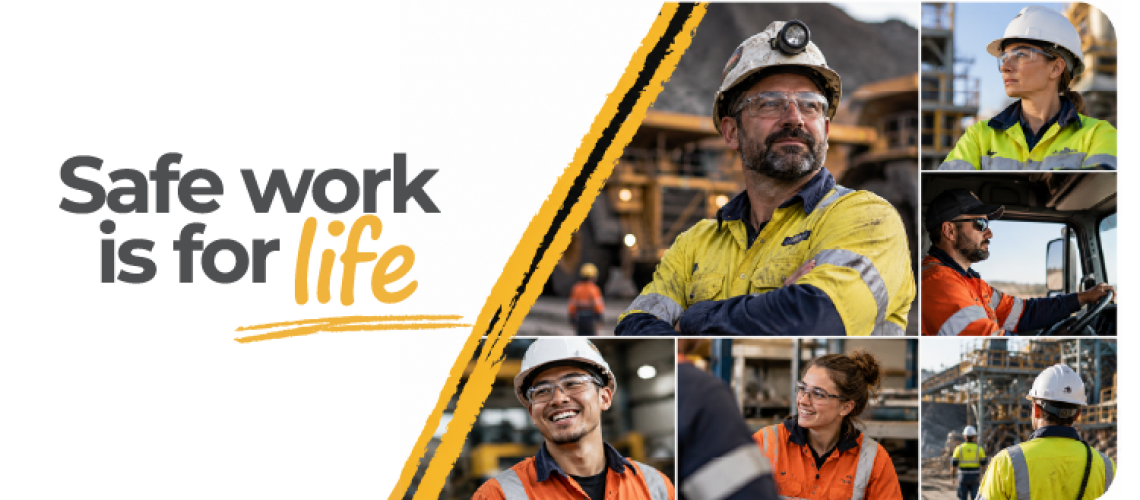
For National Safe Work Month 2026, Safe Work Australia’s theme is “Safe work is for life” – a reminder that work health and safety is about protecting workers’ lives, health and future, not simply preventing an incident in the moment.
For employers and recruitment teams, that starts before a worker ever sets foot on site.
The recruitment–safety tension is real.
Anyone who has worked in recruitment for mining, transport or heavy industry knows the pressure to mobilise candidates quickly.
Recruitment teams are measured against timelines.
Operations need people.
Clients want vacancies filled.
Candidates don’t want to wait weeks for an appointment and clearance.
Meanwhile, safety and occupational health teams have a responsibility to ensure that the appropriate assessments have been completed before a person undertakes work where particular health capabilities may be critical.
The answer isn’t for recruitment to push safety aside.
And it isn’t for safety processes to become unnecessarily slow.
The answer is a better process.
That’s where specialist medical coordination can make a significant difference.
Speed and safety don’t have to be competing priorities
A pre-employment medical isn’t simply an appointment that gets booked and ticked off.
Depending on the role, industry and employer requirements, the process may involve a combination of clinical assessment, pathology, radiology, functional assessment, drug and alcohol screening, respiratory testing, hearing assessment or other role-specific requirements.
Trying to coordinate all of this manually can create considerable administration for recruitment teams.
There are clinics to find.
Appointments to coordinate.
Candidate requirements to communicate.
Additional testing to organise.
Results to follow up.
And, when the candidate is in a regional or remote location, the available options may be considerably more limited.
This is where Medicals Australia United (MAU) helps bridge the gap.
Rather than leaving recruiters to coordinate multiple parts of the process themselves, MAU manages the medical booking and coordination process through our national network of 400+ clinics, working with candidates, clinics, radiology and pathology providers and clients to keep things moving.
The goal is simple:
Get the right medical assessment completed properly – without unnecessary delays.
Because “fit for work” isn’t just physical
There is another important part of the safety conversation that deserves attention: mental health and psychosocial workplace safety.
This is particularly relevant during National Safe Work Month because World Mental Health Day falls on 10 October.
Safe Work Australia defines psychosocial hazards as things that can cause psychological harm, including factors such as excessive job demands, poor support, remote or isolated work, lack of role clarity, workplace conflict and poor organisational relationships. These hazards can also contribute to physical harm, including fatigue-related injuries.
This matters in industries where workers may experience long shifts, remote rosters, isolation, high workloads, demanding physical environments or significant responsibility.
And fatigue deserves particular attention.
Safe Work Australia notes that fatigue can affect physical capabilities such as coordination, strength and reaction time, as well as cognitive abilities including concentration, decision-making and judgement.
For someone operating heavy machinery, driving a heavy vehicle or undertaking safety-critical work, those capabilities matter.
But it’s important to distinguish two things: a pre-employment medical is one component of a broader WHS system; it is not a substitute for managing fatigue, psychosocial hazards, workload, rostering, workplace culture or other risks once someone is employed.
Those risks need to be managed through the way work is designed and organised. Safe Work Australia specifically identifies the importance of addressing psychosocial hazards and having systems to assess fitness for work when managing fatigue.
What a good medical coordination process actually achieves
The value of a specialist coordinator isn’t simply getting someone an appointment quickly.
It’s about reducing the administrative friction around the medical.
For recruitment teams, that can mean:
• Less time searching for suitable clinics
• Fewer phone calls and emails to coordinate appointments
• Clearer communication with candidates
• Multiple components coordinated where required
• Better visibility of where a candidate is in the process
• Proactive follow-up of outstanding requirements
• Faster access to completed results
For safety and operational teams, it means the appropriate assessment process can be followed without recruitment having to become the medical coordination department.
And for candidates, it creates a clearer experience during what can already be a stressful part of starting a new job.
Removing the “fast or safe” mindset.
Perhaps the most useful way to think about the recruitment–safety relationship is this:
Recruitment doesn’t need to choose between speed and safety.
Nor should safety teams have to choose between thoroughness and operational urgency.
The two objectives can work together when the process behind them is designed properly.
At MAU, that’s what our role is designed to support.
We coordinate pre-employment and occupational medical assessments for organisations operating across mining, transport, heavy industry and other safety-critical environments, helping recruitment teams keep candidates moving while ensuring the required medical process is properly coordinated.
Because getting someone to site quickly is only part of the job.
Getting them there safely matters more.
And ultimately, that’s what “Safe work is for life” is about.
Not just getting through the next shift.
Not just filling the next vacancy.
But helping create workplaces where people can do their jobs safely and return home to the lives, families and communities that matter to them.
This National Safe Work Month, let’s make safety part of the recruitment process – not something that gets in the way of it.
Need to mobilise candidates quickly without compromising the medical process?
Talk to Medicals Australia about coordinating your next round of pre-employment medicals.
MMQ – Mineral Mine & Quarry Medicals in Queensland: What You Need to Know